
HOW DOES THERMAL REPAIR WORK?
Our specialist thermal repair system uses a six-stage process to repair damaged asphalt surfaces.
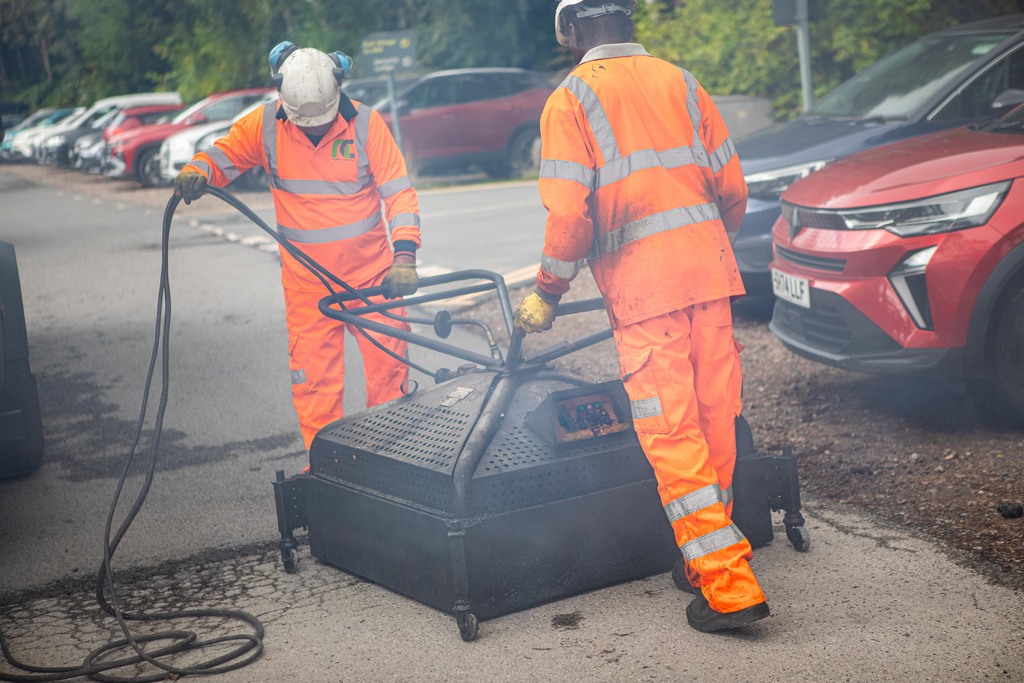
The damaged area is inspected, cleaned and prepared for repair.
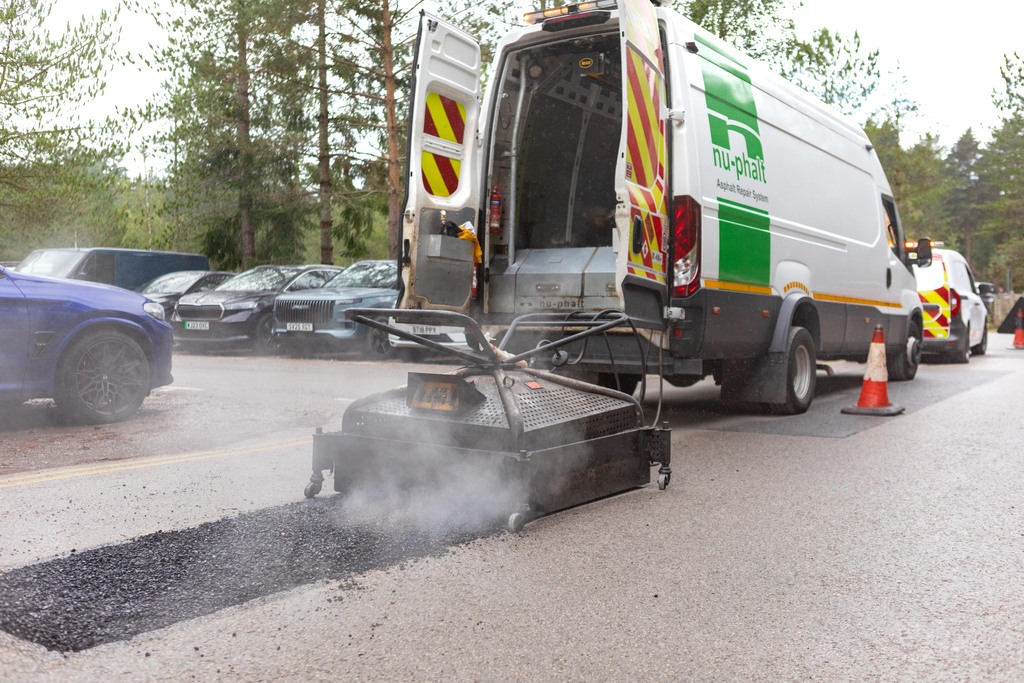
Specialist thermal equipment heats the existing asphalt, softening the material without the need for extensive excavation.
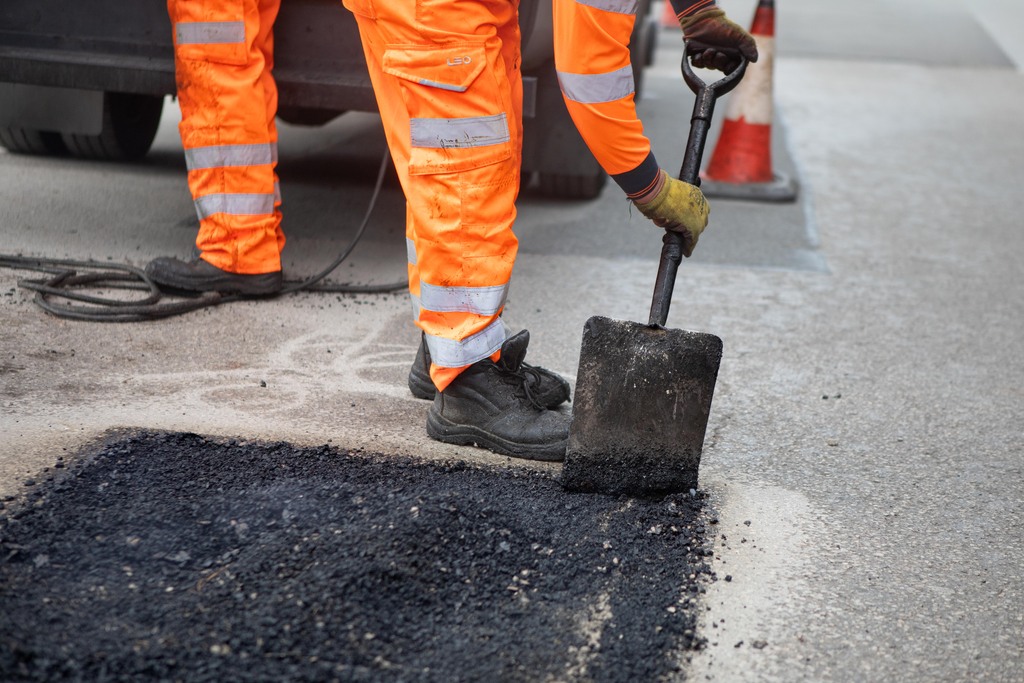
The heated asphalt is loosened and reworked, preparing the surface for reinstatement.
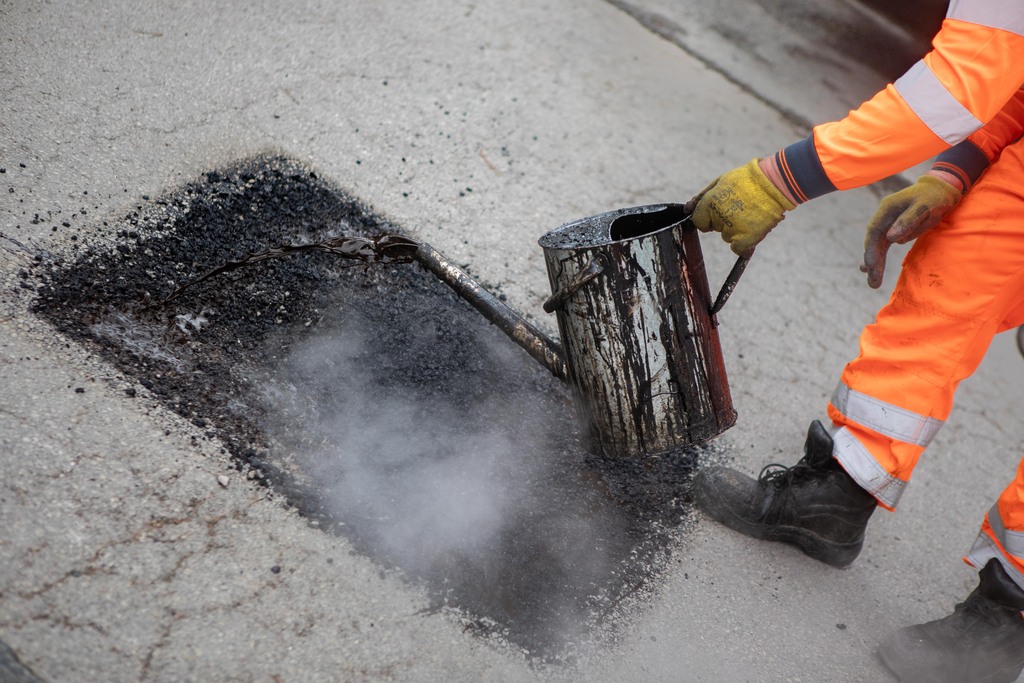
A specialist rejuvenating agent is introduced to improve the workability of the existing material.
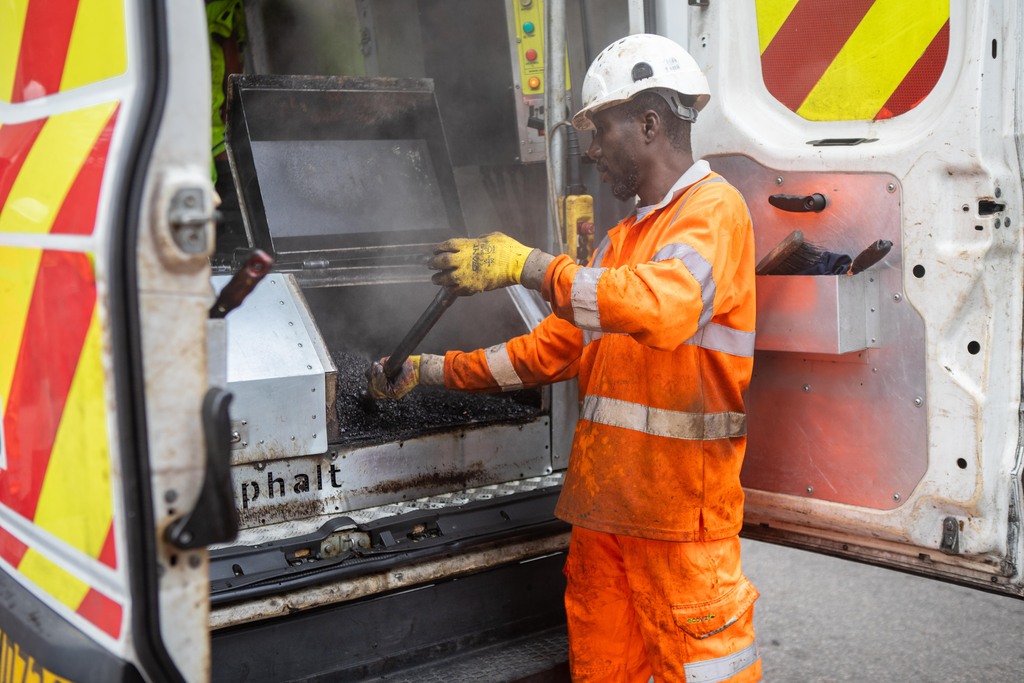
Additional asphalt is incorporated where required, and the material is levelled to match the surrounding surface.
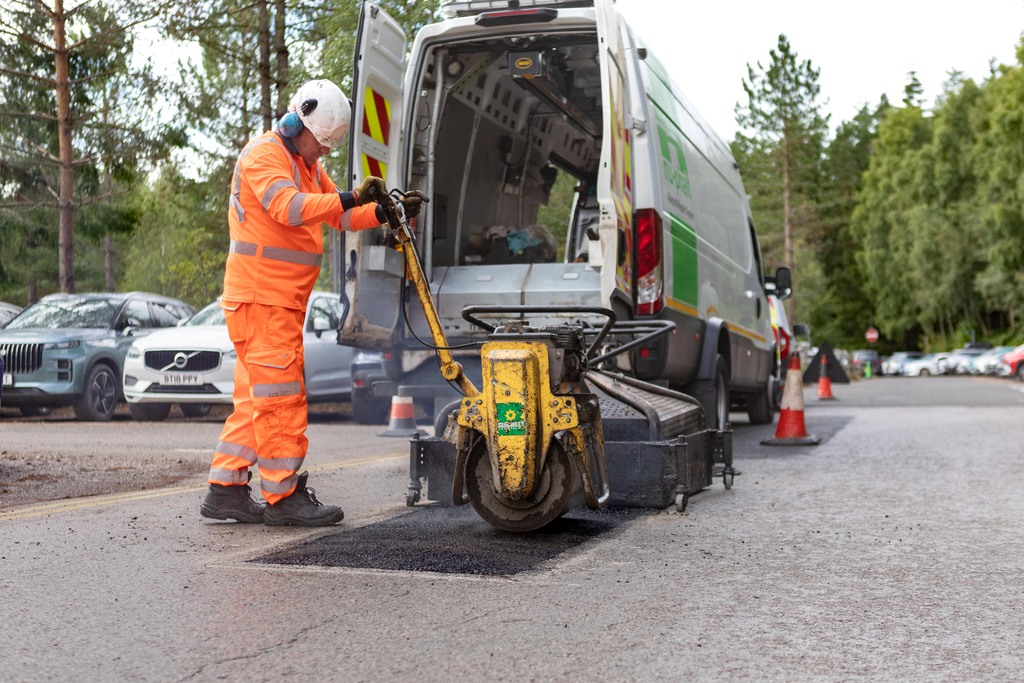
The repaired area is compacted to provide a smooth, durable finish.
Unlike conventional patching, which involves cutting out and replacing damaged sections, thermal repair allows existing asphalt to be reused. The process creates a bonded repair, reducing the risk of water ingress and deterioration associated with conventional repair joints.
Up to 30no defects repaired in a single working day.
Up to 70% less CO2 produced per m2 of repairs when compared to 40mm deep conventional patching.
A bonded repair that reduces the risk of water ingress and premature deterioration.
Repairs can be completed quickly, helping to keep roads and commercial premises operational.
Existing asphalt is recycled in situ, reducing waste and the demand for new materials.
Reduced excavation, material requirements and waste disposal can help lower overall repair costs.
Thermal repair is suitable for a wide range of applications, including:
The process is particularly beneficial for operational sites where access needs to be maintained, allowing repairs to be scheduled around business activities with minimal disruption.